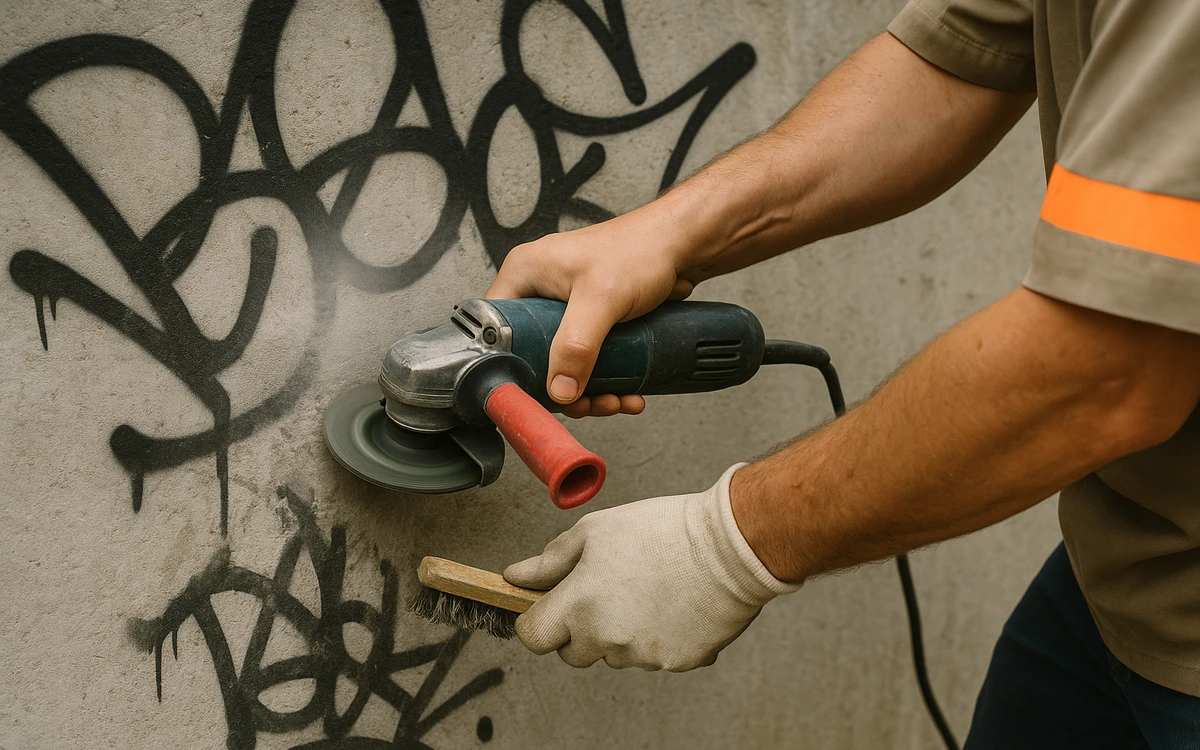
We provide professional graffiti removal for residential and commercial surfaces, using methods matched to the wall material and coating system. Request a quote today.
What signs mean your surface is really showing graffiti damage?
The clearest sign is that the graffiti is no longer just sitting on top—it’s stained, bonded, or working into the finish, so basic cleaning stops working. Once you know what to look for, you can spot patterns that usually mean the coating system is being affected, not just the surface. Here are five clear signs that call for proper removal work, not repeated light scrubbing.
- Permanent marker bleed into painted pores
- Overspray staining beyond the tagged area
- Chalky residue that wipes off onto cloth
- Rust-like bleed from metal through paint
- Repeat tags appearing same wall panel
How do you tell permanent marker bleed into painted pores needs more than washing?
If the marker color won’t lift and looks soaked in, it usually means the dye or pigment has moved into the paint film or masonry pores. Most graffiti removal starts by identifying whether the marks are dye-based, pigment-based, or bonded to a clear coat, because the chemistry matters. Keep in mind that scrubbing can polish the surface and spread the mark, leaving you with a glossy spot and lingering discoloration. A common check is whether the color returns after the wall fully dries, since some dyes show their true depth only after the moisture evaporates.
When overspray staining beyond the tagged area shows up, what causes it?
Overspray staining beyond the tagged area usually happens when aerosol mist drifts and settles on nearby texture, joints, and unmasked edges. In that case, you’re cleaning transferred paint or solvent residue that may have softened the surface finish before it re-hardened. If you treat it like a simple spot wipe, you can create a halo where the top layer is affected more than the center. After treatment, do a light-water rinse and inspect under angled light; staining that remains after a proper rinse often indicates the surface has been etched or chemically altered.
What does chalky residue that wipes off onto cloth tell you about the graffiti?
Chalky residue that wipes off onto cloth usually means the material is mostly dry pigment or chalk-based marking resting on the surface. That doesn’t automatically make it harmless—chalky buildup can hold moisture and grime, so the stain may return later as a darker film. In these cases, a controlled dry-to-wet approach matters so you don’t grind pigment deeper into stucco texture. A practical step is to wipe a small test area with a damp white cloth; if the cloth loads quickly and the area looks clean right away, you’re likely dealing with surface residue rather than absorbed staining.
Does rust-like bleed from metal through paint mean the graffiti removal failed?
Not necessarily. Rust-like bleed usually means the underlying metal is already corroding, and moisture or solvents from graffiti materials can speed up that process. When the bleed shows up as reddish streaks, it often comes through paint cracks, joints, or around fasteners, so removal alone won’t stop it. You can end up with a clean-looking surface that re-stains as the corrosion continues. The right move is to treat it as a metal-bleed issue: address the corrosion at the source, then remove any remaining graffiti and restore the coating so the stain doesn’t keep migrating.
If repeat tags appear same wall panel, does graffiti removal need to include prevention steps?
Repeat tags on the same wall panel usually mean the area is still being selected as a target, often because earlier marks weren’t fully removed or the surface finish makes it easy to mark again. People tend to re-tag what they can still see, and if ghosting remains, it can signal a working spot to the next passerby. Some coatings and textures also hold residue from prior removals, leaving a faint tint that reads like a ready canvas. After removal, a good check is to inspect the wall from multiple angles once it is fully dry; if faint discoloration is still visible, plan a second cleaning pass or coating restoration so the panel doesn’t keep sending that cue.
How Much Does Graffiti Removal Cost in Denver, CO?
Graffiti Removal in Denver, CO typically costs between $472 and $2,467 per project, with pricing driven by the surface type, coating system, and how deeply the pigment has bonded into pores or mortar. Costs are often higher for brick and textured stucco, since the work requires tighter dwell control and more detailed rinsing to prevent a hazy outline. Areas with multiple tags or rust staining take longer to prep and may need spot coating before the wall looks uniform again.